

Guide on what is a stem kit? Smart Learning Tools for Kids
IEM RoboticsTable of Content
-
An overview on what is a stem kit?
-
How Important Are Home Science Tools?
-
What are the benefits of STEM kits and other educational toys?
-
STEM kits for elementary school
-
STEM Kits with Coding: Learning Programming the Practical Way
-
Robotics Kits for Kids: Building the Future One Robot at a Time
-
3 Super Simple STEM Projects You Can Do with Common Household Items
-
Best STEM kits for students
-
Conclusion
- FAQs
Innovation often occurs in the fields of STEM, which stand for science, technology, engineering, and mathematics. Science, technology, engineering, and mathematics (STEM) education and STEM kits are definitely on the rise. The subject matter encourages and equips students with a knack for problem-solving, critical thinking, and a love of learning. We will have a look at what is a stem kit is and its benefits here.
Need some ideas for kid-friendly, instructive projects? The STEM fields—science, technology, engineering, and mathematics—influence every facet of human existence. If students are introduced to STEM through STEM Kits and given the opportunity to explore related ideas, they will develop a strong interest in the discipline and may even want to pursue a career in it. Above all else, STEM materials help students develop a love of learning that will remain with them forever.
An overview on what is a stem kit?
So, what do you think what is a stem kit? All things related to STEM (science, technology, engineering, and mathematics) are known as STEM fields. Science literacy and the development of critical thinking skills are both enhanced through STEM schooling. When did the concept of STEM first emerge? STEM kits for kids became popular to connect graduates with high-tech career opportunities. But there's more to it than that!
It's more than just dumping knowledge; it's a tailored learning environment that promotes discovery-based learning. The material is now more like useful software than mere facts to be memorized.
• Its focus on a student's hobbies and learning opportunities is crucial to incorporating it into their education.
• It's an exciting and interesting method of coaching.
• It's also important for a balanced education, which helps people be ready for the workforce.
How Important Are Home Science Tools?
Home Science Tools believes that we can make a positive impact on the world by gaining a deeper understanding of technology and how to use it. For the benefit of all people, we have made technological knowledge discovery, education, and clean access a priority. We offer both traditional and contemporary products that emphasize practical learning, an understanding of generation, the integration of mathematics, science, and engineering, and the solving of real-world problems.
Improving STEM literacy and igniting interest in STEM occupations are the primary goals of this product. As you explore these resources, you might ask, what is a stem kit exactly? It is a specialized set of tools and instructions designed to help students apply classroom theories to physical projects, fostering a hands-on understanding of complex subjects.
If you want to make scientific learning at home more engaging and productive, go no further than Home Scientific Tools for all of your lab supply needs. Parents who are concerned that their children are falling behind in STEM classes need look no further than HST for a wealth of materials to supplement their children's education outside of the classroom.
What are the benefits of STEM kits and other educational toys?
The use of STEM education kits greatly improves the application of practical knowledge. This suggests that students should devote considerable time to using these educational devices for both learning and gaming. Unconscious learning helps students because it gives them opportunities to practice what they've learned in real-life situations.
The fact that kids of all ages may play with these learning toys is fantastic! It could be fun to have a challenging kit that the whole family, including grandparents and other extended family members, can work on together.
Do you know the benefits of STEM kits cover every base! Unlike with do-it-yourself tasks, you won't need to worry about anything going missing. One can focus solely on the STEM kits classroom if they so want.
STEM kits for standard college students’ awareness on constructing foundational understanding, whilst keeping sports simple and attractive. These kits are carefully designed to support the cognitive development of young newcomers. STEM kits for elementary school regularly include: Basic engineering challenges, Introductory technological know-how experiments, and Simple robotics models. These kits help youngsters recognize core ideas early, making advanced STEM subjects less intimidating in later years.
STEM kits for elementary school
To allow hands-on education to truly go the distance, organizing them by what matters most would be a lot of work. While many options overlap, most what is a stem kit discussions center on these popular categories:
● Robotics & Coding: From basic, non-screen “coding mice” for younger coders to programmable Arduino cars for older students, these toolkits introduce logic skills and build a foundation for AI learning.
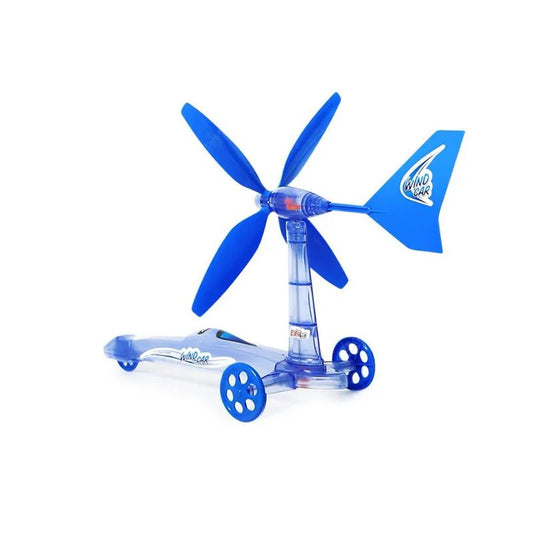
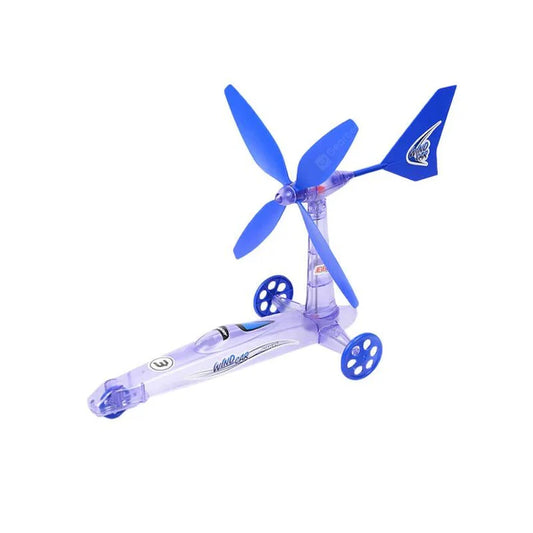
● Renewable Energy Kits allow children to observe the process of harnessing power from nature through solar panels and wind turbines, facilitating environmental science studies.
● Mechanical Engineering: With gears, pulleys, and levers, kids can build bridges, towers, or functional machines such as a catapult or a hydraulic digger.
● Biological Discovery: Often including microscope kits or owl pellet dissectors, these kits delve into cells and the balance of nature.
● Chemistry & Circuits: Whether they involve crystal growth or disconnecting electronic blocks to illuminate an LED, these experiments reveal how physical processes govern everyday phenomena.
Select a kit that corresponds to a child's natural interests: space, animals, or gadgets, so that learning is more play than work.
STEM Kits with Coding: Learning Programming the Practical Way
STEM kits with coding combine hardware mastering with software capabilities. These kits introduce college students to programming through interactive initiatives rather than traditional coding and sports activities. Coding-based STEM kits are frequently used:
• Block-based programming for beginners
• Text-based coding for advanced rookies
• Visual interfaces and apps
By using STEM kits with coding, students learn how software programs control hardware, an essential concept in robotics, automation, and the modern generation. Coding-targeted STEM kits help freshmen develop logical reasoning, sequencing, and computational problem-solving skills.
Robotics Kits for Kids: Building the Future One Robot at a Time
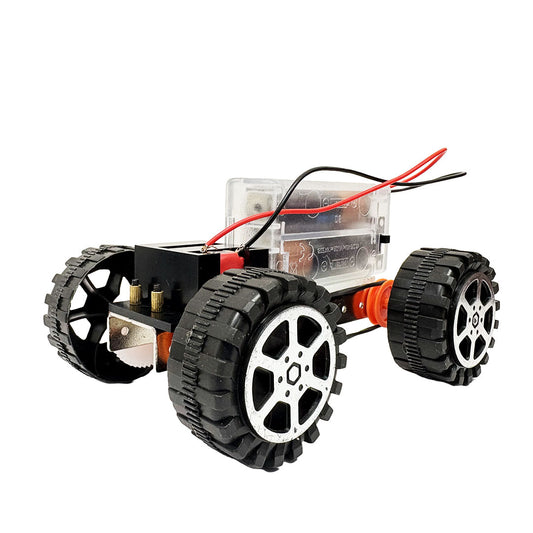
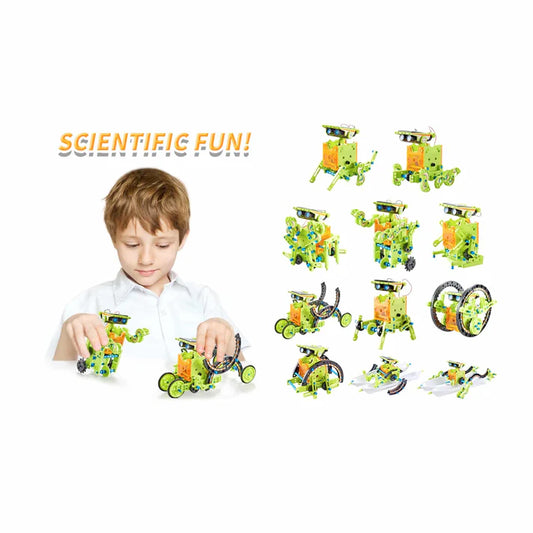
The robotics kits for kids are a few of the most famous forms of STEM kits to be had these days. These kits permit children to lay out, construct, and occasionally program their own robots.
Robotics kits normally encompass:
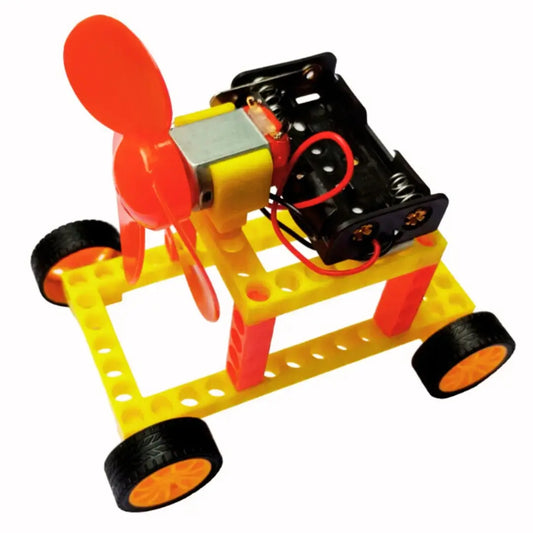
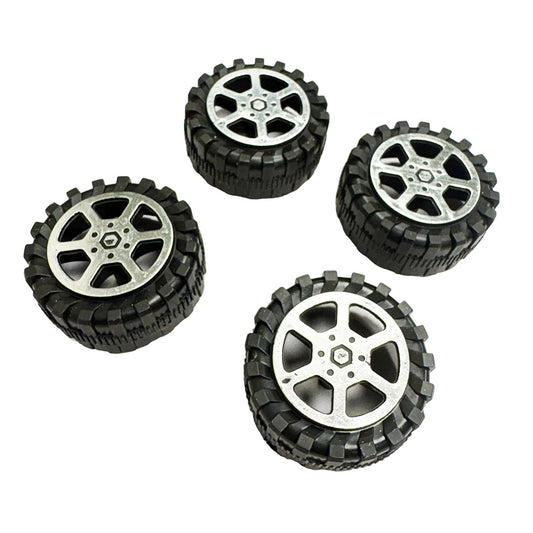
• Motors and wheels
• Sensors
• Microcontrollers
• Assembly equipment
• Coding interfaces
By using STEM education kits, children explore fundamental concepts in mechanics, electronics, automation, and logic. These kits additionally introduce programming basics, making them a splendid foundation for advanced STEM learning. Robotics kits for kids no longer best demonstrate technical expertise but also enhance patience, creativity, and analytical thinking.
3 Super Simple STEM Projects You Can Do with Common Household Items
Science, Technology, Engineering, and Mathematics, or STEM, is an acronym that stands for a few things. These ideas are applicable in many aspects of our daily life, from construction to the kitchen!
Exploring the globe through hands-on STEM kit activities at home experiments is a great way to educate children about the world around them. It may be anything from a modest homemade craft to a complicated scientific experiment.
These 3 fun, best STEM kits for students cover a wide range of topics, from biology and chemistry to engineering and mathematics, and are perfect for children. The hallmark of an excellent STEM experiment is its ability to impart practical scientific concepts to students in an engaging, imaginative, and experiential manner.
1. A Jar with a Cloud
Take a cloud out of the sky! In this science experiment, your little one will learn how to make a cloud in a jar! A few simple items are all that's required: a balloon, a flashlight, matches, a glass jar, and warm water. The water cycle and evaporation are two topics that children can study by observing the world around them.
What is required:
● To fill the jar halfway, pour in warm water.
● For a few seconds, light a match and let the smoke penetrate the jar. Immediately after that, take it off.
● Put a half-cut balloon over the jar's opening as soon as possible.
● Carefully deflate the balloon. You are actively altering the air pressure within the container.
● As the clouds begin to gather, observe them attentively. To get a better look at the jar, shine a spotlight on it!
2. Create Your Own Balloon Vehicle
How about air-powered vehicles instead of electric ones? Building a "balloon car" that can move using only recycled materials and the force of air pressure is the goal of this DIY STEM kits activity for kids. A balloon, a few skewers, a plastic straw, and several empty plastic bottles are all that's needed!
While competing in automobile races, your little one might gain knowledge about air pressure.
● Two straws, each somewhat longer than the bottle's breadth, should be cut.
● The straws should be taped to the base of the bottle. Check that they are perpendicular to one another.
● Make a small incision in the middle of each bottle cap. These will serve as the vehicle's wheels.
● Thread the straws with the skewers. The wheels will revolve around this axis.
● Make sure the skewers can spin before you secure the bottle tops on either end.
● Wrap the straw's tip with a rubber band to keep it in place.
● Pinch the straw after inflating the balloon to prevent air from escaping. Because of Newton's law of action and response, the automobile will move when you release its grip.
3. Magnetic Slime
Think liquid magnetic slime is awesome? The classic slime that kids around the world love has a new scientific spin in this STEM kits for kids. This slime recipe calls for white glue, liquid starch, powdered iron oxide, and a powerful magnet. This one-of-a-kind craft will teach your kid about magnetism and its characteristics.
● Combine two tablespoons of iron oxide powder with a quarter cup of white glue.
● Add ⅛ cup of liquid starch and mix well. Just a quick rinse with cold water should do the trick if you accidentally added too much liquid starch to the slime.
● Knead it by hand until it takes on a slimy consistency.
● With the help of a magnet, your little one may play with the slime.
Best STEM kits for students
Finding the right balance between fun and education is key to keeping elementary students engaged. When educators and parents ask, what is a stem kit, they are often looking for the perfect bridge between play and academic growth. Here are the top-rated STEM kits categorized by their core learning focus:
1) Robotics and Coding Kits
These bundles introduce kids to logic, sequencing, and problem-solving—often without a screen.
● Dash and Dot: These are programmable robots that follow voice instructions through specially set obstacle courses.
● Botley the Coding Robot: This is a completely screen-free way to develop core coding skills through active play.
2) Engineering and Building Sets
Ideal for young tinkerers who love taking things apart to see how they tick, in this category, a stem kit usually means hands-on exploration of physical structures and mechanisms.
● LEGO Education Brick Motion: Through building, students learn about forces and interactions using sports physics.
● Magna-Tiles: magnetic 3D pieces which invite you to explore geometry and the strength of structures.
3) Science Investigation Kits
These kits can turn a room into a mini-lab, be it in the classroom or your living room.
● National Geographic Earth Science Kit: It offers everything needed to grow crystals, build volcanoes, and dig for fossils.
● Snap Circuits: A safe, simple way for kids to learn electronics, snapping together to form a real circuit board.
Conclusion
So now you know what is a stem kit! The ultimate goal of Stem Kits is to encourage a love of STEM (science, technology, engineering, and mathematics) fields by stimulating learning, curiosity, and a thirst for knowledge. All ages can discover nurturing spaces with these products, which include interactive experiments, exciting challenges, and hands-on activities. In this way, people can bring their thoughts to life, sparking an eternal interest in particular subjects. In addition, students develop their collaboration and communication skills via the program's many exercises that require them to work in groups. This is just one more way that this program enhances the learning process.
Consequently, we need to hire the appropriate tools so that our children may be innovators, problem solvers, and lifelong learners who contribute to a better society.
In conclusion, we may say that these tools are critical for creating a better future populated by folks who are curious about science and can plan ahead carefully. In addition, participants' creativity and problem-solving skills are often enhanced beyond expectations through the bulk of cooperative work completed in such projects.
FAQS
1. What is a STEM kit?
A STEM kit is an educational package containing curated materials and guided projects designed to teach Science, Technology, Engineering, and Mathematics. Unlike traditional toys, these kits focus on discovery-based learning and hands-on problem-solving.
2. What are the main benefits of STEM kits for children?
The benefits of STEM kits include developing critical thinking, improving persistence, and applying theoretical knowledge to real-world situations. They turn abstract concepts into tangible experiments that enhance long-term memory.
3. At what age should kids start using STEM education kits?
Children as young as 3 to 5 can start with basic STEM kits, such as magnetic building blocks. However, more structured STEM kits for elementary school usually target ages 6 to 11 to support their growing cognitive development.
4. Can I use STEM kits for classroom activities?
Yes, a STEM kits classroom setting promotes teamwork and communication. These kits allow students to work in groups to solve engineering challenges or conduct scientific experiments, making the curriculum more interactive.
5. What is included in typical robotics kits for kids?
Most robotics kits for kids include motors, wheels, sensors, microcontrollers, and assembly tools. These kits allow children to build their own functional robots while learning the basics of automation and electronic logic.
6. How do STEM kits with coding work for beginners?
STEM kits with coding bridge the gap between software and hardware. Beginners often start with "screen-free" coding robots or block-based visual interfaces, while advanced learners use text-based programming to control their physical creations.
7. Are there any DIY STEM kits I can make at home?
Absolutely! DIY STEM kits can be made using household items like balloons, plastic bottles, and magnets. Examples include building a balloon-powered car or creating a "cloud in a jar" to study the water cycle and air pressure.
8. Why are STEM kits important for a child's future career?
By engaging with STEM education kits, students develop a "knack" for innovation and technical literacy. This early exposure helps bridge the gap between graduation and high-tech career opportunities in a rapidly evolving workforce.
9. What are the best STEM kits for students interested in science?
The best STEM kits for students interested in science often include chemistry sets for crystal growth, Earth science kits for building volcanoes, or biological kits with microscopes and dissectors to study nature.
10. How do I choose the right kit for my child?
You should select a kit based on the child's natural interests—such as space, gadgets, or animals—and ensure it matches their age level. Whether it is STEM kit activities at home or in a lab, the goal is to make learning feel like play.

By: Asmita Ghosh

1 comment
Calling